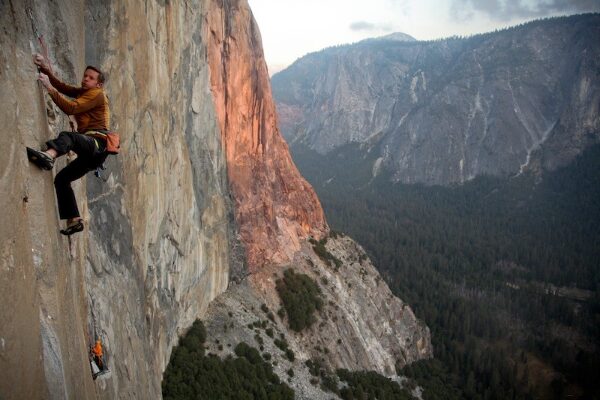
Most people think confidence is something you build by succeeding.
That’s not true.
If success created confidence, people with long resumes would be unshakeable. They aren’t. Many of them are the most anxious in the room. They protect their position instead of standing in it.
That tells you something important.
Confidence is not the result of winning.
It’s the result of surviving without cover.
True confidence begins where external validation ends.
That’s why it’s so difficult.
From an early age, people are trained to borrow certainty from outside themselves. Grades. Titles. Approval. Consensus. Metrics. Applause. As long as those are present, things feel stable.
But none of that produces confidence.
It produces dependency.
Real confidence doesn’t form until those supports fail—or are voluntarily released.
Here’s the hurdle most people never cross.
Confidence requires you to accept that you will sometimes be wrong without being undone by it.
That sounds simple.
It isn’t.
Most people tie their sense of worth to being correct, liked, or aligned with the group. When those are threatened, the nervous system reacts as if survival is at stake. The body tightens. The mind defends. The voice either hardens or disappears.
That reaction blocks confidence from ever forming.
Why?
Because confidence is not certainty.
It is stability under uncertainty.
This is why confidence can’t be taught directly.
You can teach skills.
You can teach knowledge.
You can teach performance.
But confidence only emerges after someone stands alone long enough to realize:
“I can carry the consequences of my own judgment.”
Until that moment happens, confidence is always performative.
Look closely and you’ll notice the difference.
False confidence is loud.
It needs reinforcement.
It collapses under challenge.
True confidence is quiet.
It doesn’t rush.
It doesn’t argue to win.
It doesn’t need to dominate the room.
It has already survived the thing people fear most.
So what is that thing?
Isolation with responsibility.
Not loneliness.
Not abandonment.
Isolation with responsibility means:
No one is telling you what to think.
No one is validating the choice.
No one is promising it will work out.
And you move anyway.
That is the crossing.
This is why confidence feels inaccessible to so many people today.
We live in systems designed to remove that moment.
Algorithms nudge.
Platforms reward conformity.
Institutions cushion failure.
Narratives pre-approve positions.
All of that makes life more comfortable.
It also delays confidence indefinitely.
You can’t develop it if you’re never required to stand without permission.
True confidence does not arrive as a feeling.
It arrives as a posture.
A way of standing in the world that says:
“I will listen.”
“I will adjust.”
“I will take responsibility for the outcome.”
And crucially:
“I will not collapse if this costs me something.”
That posture is earned, not granted.
The hardest part of crossing the confidence hurdle is this:
You have to let go of the version of yourself that was protected by excuses.
The one who could say:
“I would have succeeded if…”
“I would have spoken if…”
“I would have acted if…”
Those conditions keep you safe.
They also keep you unfinished.
Confidence requires finality.
Not arrogance.
Finality.
The decision to stop waiting.
This is why people sense confidence when they encounter it.
It doesn’t feel aggressive.
It doesn’t feel superior.
It feels anchored.
Like someone who knows the ground may shift—but trusts their footing anyway.
Confidence isn’t something you add to yourself.
It’s what’s left when you remove dependence.
And that’s why the hurdle is so high.
You don’t climb over it.
You step through it—
alone,
without applause,
and without guarantees.
Most people turn back right there.
Those who don’t,
never need to prove it again.
The Faust Baseline™Purchasing Page – Intelligent People Assume Nothing
micvicfaust@intelligent-people.org
© 2026 The Faust Baseline LLC
All rights reserved.