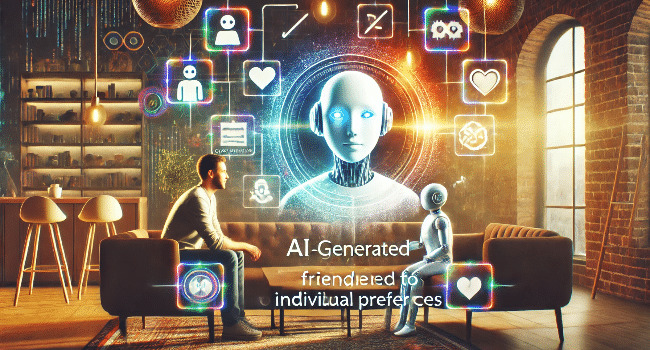
If we’re honest, most people are waiting for AI to “get better” the same way they wait for software updates.
They assume the companies will fix it.
They assume regulators will correct it.
They assume governance will come from the inside.
That assumption is wrong.
Not because the people inside are evil.
Not because the technology is broken.
But because systems don’t change themselves against their own incentives.
AI platforms are built to optimize for scale, speed, engagement, and liability reduction. Those are not moral goals. They’re operational ones. You don’t get wisdom by accident when the system is tuned for throughput.
That’s why governance that tries to start inside the platform always stalls. It fights gravity. It asks a machine to prioritize judgment over efficiency while rewarding it for doing the opposite.
Real change only happens one way.
From the outside in.
Why Internal Governance Can’t Lead
Internal AI governance is constrained before it even begins.
Every platform has to answer the same questions first:
Can this scale?
Can this be defended legally?
Can this be shipped safely across millions of users?
Those constraints force blunt solutions. Generalized safety layers. Broad filtering. Lowest-common-denominator reasoning. The goal becomes acceptable output, not sound judgment.
That’s why AI often feels strangely careful and strangely shallow at the same time. It avoids obvious harm, but it also avoids responsibility. It gives answers that are safe to say, not answers that are true enough to stand on.
You can’t fix that with better rules alone.
Because rules written inside the system still serve the system.
Why Use Changes Systems Faster Than Policy
There’s a pattern people forget.
Every meaningful platform shift in history didn’t come from policy first. It came from behavior.
Browsers didn’t become standards because committees picked them.
Security didn’t improve because companies wanted it to.
User interfaces didn’t get simpler because engineers felt generous.
They changed because people used external tools, habits, and workarounds so consistently that platforms had to absorb them or be left behind.
Volume beats theory every time.
When millions of people use an external discipline with AI—consistently, deliberately, and visibly—that discipline becomes impossible to ignore. Not because it’s morally superior, but because it works.
Platforms don’t copy principles.
They copy patterns that succeed at scale.
Why the Home Is the First Battlefield
This is where most people misunderstand the moment.
They think AI governance starts with institutions.
It doesn’t.
It starts at home.
Because the first place AI actually touches real judgment isn’t government or enterprise. It’s the kitchen table. Medical forms. Legal letters. Financial decisions. Parenting questions. Conflict resolution. Fear management.
That’s where people either learn to think with AI or surrender thinking to it.
The Home Guardian exists for this reason.
Not to control AI.
Not to restrict it.
But to slow the interaction enough that judgment stays human.
When people learn to use AI with structure, margin, and moral orientation at home, something critical happens: they stop being passive consumers of output and start becoming active operators of reasoning.
That shift changes everything downstream.
Why the Baseline Is the First Door
The Baseline isn’t a platform. That matters.
It doesn’t compete with AI systems. It rides on top of them. It shapes posture, not output. It governs interaction, not data.
That’s why it can spread where internal rules can’t.
The Baseline teaches people how to engage AI:
How to slow instead of rush.
How to detect drift.
How to separate signal from confidence.
How to preserve responsibility instead of outsourcing it.
Once that posture becomes habitual, AI stops being a replacement for thinking and becomes a mirror for it.
That’s the first door.
And it has to be opened by people, not companies.
Why Advancement Requires Leaving the Controller Model
Right now, most AI use follows a controller model.
User asks.
AI responds.
User reacts.
That loop trains dependency. It rewards speed over clarity. It encourages offloading responsibility instead of refining judgment.
If we want real advancement—human and AI together—that model has to break.
The next phase isn’t smarter controllers.
It’s cooperative reasoning.
That only happens when humans retain authorship and AI is treated as an instrument, not an authority.
You don’t get there by waiting for platforms to decide it’s time.
You get there by using AI differently now, at scale, until the old model stops being sufficient.
Why This Has to Be Done on Our Terms
Here’s the uncomfortable part.
If people don’t define the terms of AI interaction themselves, the terms will be defined for them—by incentives that don’t care about judgment, truth, or long-term human stability.
Convenience always arrives before wisdom.
Control always follows confusion.
The Baseline and the Home Guardian are not about resisting AI.
They’re about meeting it as equals.
Teaching people how to think with machines instead of beneath them.
That’s not something a platform can impose.
It’s something a culture has to practice.
The Real Shift
AI will not become wiser because we ask it to.
It will become wiser because people demand more of themselves while using it.
That change starts small.
It starts locally.
It starts at home.
And once enough people operate that way, platforms won’t have a choice.
They’ll follow.
Not because they’re enlightened.
But because that’s how systems evolve—
from the outside in.
The Faust Baseline™Purchasing Page – Intelligent People Assume Nothing
micvicfaust@intelligent-people.org
© 2026 The Faust Baseline LLC
All rights reserved.