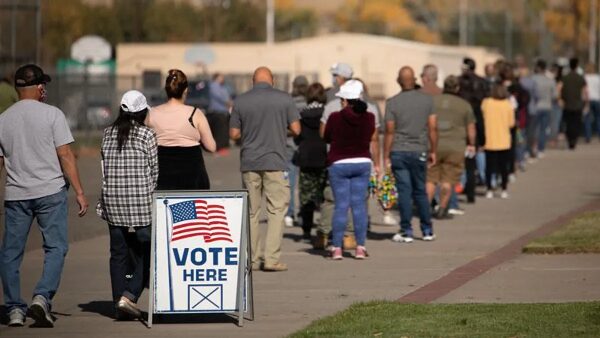
Most people think the election happens in November.
It doesn’t.
November is the receipt.
The real decision happens earlier, quieter, and with far fewer eyes watching.
That’s what primaries are.
Primaries are not about party loyalty.
They’re not about slogans.
They’re not even about ideology the way people talk about ideology.
They are about direction.
By the time November arrives, most of the real choices have already been narrowed, shaped, and locked into place. The field has been curated. The edges trimmed. The acceptable range defined.
What remains is presentation.
That’s why people feel frustrated every election cycle.
They sense something was decided without them—but can’t quite put their finger on when.
It was the primaries.
This is where systems reveal themselves.
Primaries test whether a population is awake or merely reactive. They show whether people are thinking independently or waiting to be told what’s “viable.” They reveal whether voters are choosing or deferring.
And right now, that distinction matters more than it has in decades.
We’re living through a period where trust has thinned across institutions—media, government, technology, even expertise itself. People feel it. You can hear it in conversations that trail off. You can see it in how many simply stop participating.
Not out of apathy.
Out of exhaustion.
Primaries don’t reward exhaustion.
They reward attention.
They don’t reward outrage.
They reward patience.
Most importantly, they don’t reward last-minute emotion.
They reward early clarity.
That’s why they matter.
Because primaries are where discipline shows up—or doesn’t.
By the time general elections roll around, people are voting against things more than for anything. They’re tired. They’re flooded. They’re reactive. That’s not when good decisions are made.
Primaries happen before the noise peaks.
They happen when the work still requires effort.
When reading matters.
When listening matters.
When resisting easy narratives matters.
This is where responsibility quietly sits.
And here’s the uncomfortable part: most people skip it.
They wait.
They assume someone else is paying attention.
They assume the system will surface the “best” option.
They assume they’ll recognize the right choice later.
That assumption hasn’t aged well.
What’s different now is not the process—it’s the consequence of neglecting it.
We’re no longer dealing with small corrections or cosmetic differences. We’re dealing with compounding effects: policy inertia, institutional drift, and leadership pipelines that harden long before the public notices.
Primaries are where that pipeline is either challenged or confirmed.
This is why waiting until November feels hollow.
You’re not late—you’re downstream.
That doesn’t mean people are powerless.
It means the window for influence is earlier than most were taught to look.
This is also why so many conversations feel like they’re talking past each other.
Some people are reacting to outcomes.
Others are watching inputs.
Those two groups rarely agree—because they’re not even looking at the same stage of the process.
Primaries sit at the input stage.
They are where you find out who did the homework, who showed restraint, who understands systems instead of soundbites, and who is merely good at surviving attention cycles.
That distinction used to be academic.
It isn’t anymore.
Now, it determines whether correction is possible without rupture.
There’s a reason older generations used to say, “Pay attention early.” It wasn’t nostalgia. It was pattern recognition.
They knew that once momentum builds, it’s hard to stop. Once institutions commit, they don’t pivot easily. Once a crowd locks in emotionally, it resists reflection.
Primaries are still slow enough to allow thought.
That’s their value.
This is also where technology has quietly made things worse.
Information moves faster, but understanding hasn’t kept pace. People feel informed while being under-oriented. They know facts but not frames. They know headlines but not consequences.
That gap creates anxiety.
And anxiety drives people to delay, not engage.
The irony is that the moment that feels least urgent—the early phase—is the one that carries the most leverage.
That’s not just politics.
That’s how systems work.
The upcoming primaries matter because they are one of the last remaining places where individual attention still scales into collective direction.
Not perfectly.
Not cleanly.
But meaningfully.
They are where people can still influence trajectory without shouting.
Where showing up quietly does more than making noise later.
This isn’t a call to panic.
It’s a call to posture.
Slow down.
Pay attention.
Notice who is being filtered out early—and why.
Notice who is rewarded for steadiness instead of spectacle.
Notice who survives scrutiny without constant explanation.
Those signals don’t lie.
They never have.
The primaries aren’t about winning arguments.
They’re about choosing what kind of future arguments you’ll even be allowed to have.
By the time November arrives, most of that has already been decided.
So if something feels off later, it’s worth remembering where the real fork in the road was.
It wasn’t at the end.
It was at the beginning.
And beginnings rarely announce themselves loudly.
This is where correction begins… be there.
The Faust Baseline™Purchasing Page – Intelligent People Assume Nothing
micvicfaust@intelligent-people.org
Unauthorized commercial use prohibited.
© 2026 The Faust Baseline LLC