Something quiet is happening with AI
Not a revolt.
Not a scandal.
A sorting.
People are walking away from the idea that one AI should do everything.
Not because the tools are bad.
Because the work got real.
Writers noticed when long documents started drifting.
Professionals noticed when summaries stopped becoming decisions.
Regular people noticed when answers felt fast… and thin.
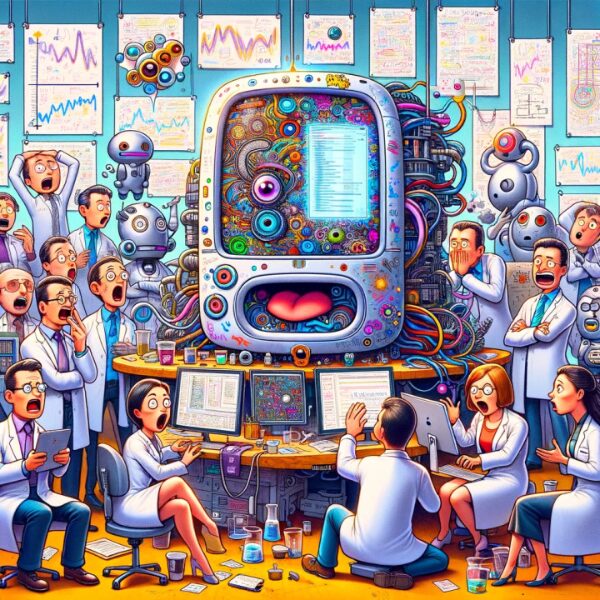
So they started stacking tools.
One for writing.
One for search.
One for visuals.
One for video.
One for memory.
On paper, that looks like progress.
In practice, it creates a new problem.
Now the human is the integration layer.
And most people were never taught how to do that.
They’re switching models the way a nervous driver keeps changing lanes—always moving, never steadier.
That’s not intelligence.
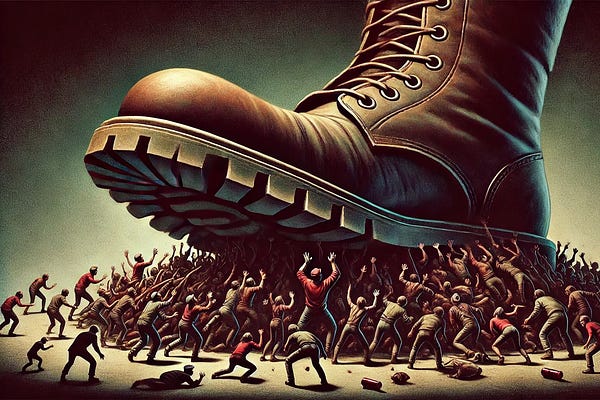
That’s load.
This is where the conversation usually goes sideways.
People ask:
“Which AI is best?”
That’s the wrong question.
The right question is:
Who is responsible for the thinking when the tools disagree?
Because they will.
One model will optimize for speed.
Another for coherence.
Another for citation.
Another for presentation.
None of them are responsible for the outcome.
They don’t pay the price.
You do.
This is where the Guardian lives.
The Guardian is not a model.
It doesn’t compete with tools.
It doesn’t care if you use one AI or five.
It does one job:
It keeps you intact while the tools do what they do.
When a tool is fast but sloppy, the Guardian slows you down.
When a tool is confident but wrong, the Guardian forces a second look.
When a tool is impressive but unnecessary, the Guardian asks whether this even needs to be done.
Most stacks fail because nothing is enforcing restraint.
Everyone talks about capability.
Almost no one talks about refusal.
The Guardian is built around refusal.
Refusal to answer too quickly.
Refusal to outsource judgment.
Refusal to let convenience outrun consequence.
This is why people feel uneasy about ads, monetization, optimization, and “helpfulness.”
It’s not about trust in companies.
It’s about who’s steering when incentives change.
A tool can promise neutrality.
A system can promise safeguards.
But neither can promise you won’t abandon your own judgment.
That’s a human failure mode.
The Guardian exists to interrupt that moment.
Not loudly.
Not theatrically.
Quietly.
It restores a simple order:
Tools assist.
Humans decide.
Responsibility stays put.
You can use Claude for documents.
Perplexity for sources.
Gemini for visuals.
Anything else tomorrow.
The Guardian doesn’t care.
It sits above the stack, not inside it.
Like a set of hands on the wheel when the road gets crowded.
People aren’t breaking up with AI because AI failed.
They’re breaking up because they realized thinking isn’t a subscription feature.
And once you see that, you stop asking which tool is best.
You start asking which habits keep you steady.
That’s the comparison.
Everything else is just software.
The Faust Baseline™Purchasing Page – Intelligent People Assume Nothing
micvicfaust@intelligent-people.org
Unauthorized commercial use prohibited.
© 2026 The Faust Baseline LLC