There are seasons when the ground feels solid.
You can plan.
You can predict.
You can afford to move fast.
This is not one of those seasons.
Right now, what most people are feeling isn’t fear in the dramatic sense.
It’s strain.
Too many variables are moving at the same time.
Costs.
Health.
Timing.
Institutions.
Promises that no longer land the way they used to.
Nothing feels stable long enough to lean on.
That doesn’t mean people are weak.
It means the environment is demanding something different from them.
This is where fortitude matters.
Not as a slogan.
Not as a motivational word.
But as a working definition.
Fortitude is the ability to withstand uncertainty.
Not eliminate it.
Not outrun it.
Not pretend it isn’t there.
Withstand it.
That distinction matters.
Fortitude is not optimism.
Optimism looks ahead and assumes things will improve.
Fortitude looks at the present and says:
“I will remain upright even if improvement takes time.”
Fortitude is not confidence.
Confidence depends on evidence and feedback.
Fortitude does not require either.
It functions when evidence is incomplete and feedback is delayed.
Fortitude is not courage in the cinematic sense.
No speeches.
No charge into the fire.
It is quieter than that.
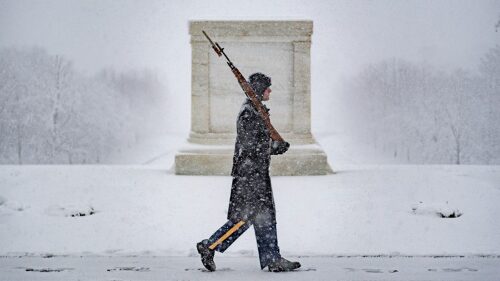
It is the discipline to hold position while outcomes remain unclear.
Most people break not because something terrible happens,
but because they feel forced to act before they understand what they’re acting on.
Uncertainty creates pressure to move.
To decide.
To declare.
To react.
Fortitude resists that pressure.
It says:
“I will not trade steadiness for speed.”
“I will not confuse motion with progress.”
“I will not let discomfort make decisions for me.”
This is not passivity.
It is restraint with intent.
There is a difference.
When uncertainty is high, reaction feels like relief.
Doing something feels better than waiting.
But reaction often creates second-order problems that last longer than the uncertainty itself.
Fortitude interrupts that cycle.
It buys time.
It preserves judgment.
It keeps the door open long enough for clarity to arrive.
And clarity does arrive—but only for those still standing when it does.
Right now, many people are exhausted not because they’ve been tested once,
but because they’ve been tested repeatedly without resolution.
That wears on anyone.
Fortitude is how you absorb that wear without hardening into bitterness
or collapsing into panic.
It allows you to say:
“I don’t know how this ends yet.”
without needing to add,
“and therefore everything is falling apart.”
Those are not the same statement.
Fortitude separates them.
It creates a stable inner posture even when the external picture remains unsettled.
That posture becomes a rock.
Not something dramatic.
Something dependable.
A place you return to when headlines change,
when predictions fail,
when timelines slip.
Fortitude does not promise comfort.
It promises continuity.
It allows you to remain yourself while the situation sorts itself out.
And that may be the most important function it serves right now.
Because systems can wobble.
Narratives can churn.
Authority can falter.
But a person with fortitude remains oriented.
They don’t need to know everything.
They don’t need to solve everything.
They don’t need to convince anyone.
They need to hold.
Hold their standards.
Hold their judgment.
Hold their sense of proportion.
That is strength of mind.
Not loud.
Not visible.
But durable.
Fortitude is not about winning the moment.
It’s about surviving it intact.
And when the fog lifts—and it always does—
those who practiced fortitude are the ones still capable of choosing wisely.
That is why this word matters now.
Not as inspiration.
As equipment.
A rock you can stand on
until the ground settles again.
The Faust Baseline™Purchasing Page – Intelligent People Assume Nothing
micvicfaust@intelligent-people.org
Unauthorized commercial use prohibited.
© 2026 The Faust Baseline LLC