The Faust Baseline™Purchasing Page – Intelligent People Assume Nothing
micvicfaust@intelligent-people.org
People don’t say it out loud much, but you can hear it in how they pause mid-sentence.
Something like:
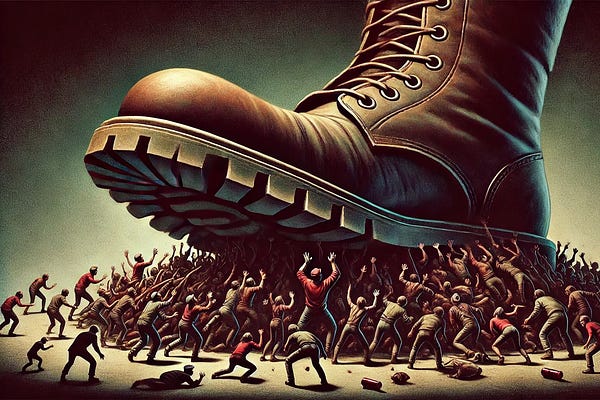
“I’m just waiting for the other shoe to drop.”
That line doesn’t come from panic.
It comes from pattern recognition.
When you’ve lived long enough, you learn that real change rarely arrives with a trumpet blast. It shows up as quiet. As delay. As the moment where nothing obvious happens—and that’s exactly what makes everyone uneasy.
Because we’ve been trained to expect noise.
For years now, every turn has come with sirens: breaking news banners, urgent alerts, leaders shouting certainty they don’t possess. Action has been theatrical. Consequences have been postponed. Accountability has been smoothed over, renamed, rebranded, or kicked down the road.
So when things go still, people don’t feel calm.
They feel suspicious.
But here’s the thing most aren’t being told:
silence is not always absence. Sometimes it’s compression.
Before a structure corrects, it tightens.
Before a system changes, it stops improvising.
Before consequences land, motion slows.
That “waiting” feeling isn’t dread by default. It’s your mind noticing that the usual tricks aren’t working anymore.
The old distractions aren’t landing.
The emotional bait isn’t pulling like it used to.
The promises feel thin.
And for the first using in a long while, people aren’t rushing to fill the gap.
They’re watching.
That’s new.
In the past, when pressure built, the public was herded—toward outrage, toward fear, toward some manufactured release valve. But now, something quieter is happening. People aren’t demanding explanations as loudly. They’re demanding outcomes. And when those don’t appear, they don’t explode—they withdraw attention.
That’s not apathy.
That’s assessment.
It’s the difference between someone pounding on a door and someone stepping back to see how the building is actually put together.
The reason the silence feels heavy is because it removes the usual cues. There’s no script telling you how to feel. No approved emotional response. No clear villain or savior being handed to you.
You’re left with your own judgment.
And that makes systems nervous.
Because systems don’t break when people are angry.
They break when people stop reacting on command.
Right now, a lot of people are doing something simple and dangerous to unstable structures: they’re waiting without being distracted.
They’re noticing what isn’t happening.
They’re tracking who keeps delaying.
They’re remembering who promised certainty and delivered confusion.
That’s not chaos brewing.
That’s memory returning.
The “other shoe” everyone thinks is about to drop isn’t necessarily collapse. It’s exposure. It’s the moment when delay can’t be disguised as strategy anymore. When reassurance stops working because people want predictability, not comfort.
Predictability doesn’t come from speeches.
It comes from patterns that hold.
And when patterns fail repeatedly, people don’t need to be told something is wrong—they know. They start looking for a fixed reference point. Something that doesn’t move just because pressure increases.
That’s why this moment matters more than it looks.
We’re used to thinking change is loud. It isn’t. Most real correction starts with restraint. With fewer words. With a refusal to be rushed into emotional compliance.
Waiting, in this sense, isn’t passive.
It’s disciplined.
It’s saying: I don’t need another explanation. I need to see what actually happens next.
That posture changes the balance of power more than protests ever did. Because it denies the system its favorite resource: predictable reaction.
If you’re feeling that “other shoe” tension, it doesn’t mean you’re anxious. It means you’re paying attention. Your internal compass is noticing a gap between narrative and reality—and it’s holding the needle steady instead of spinning.
That’s not fear.
That’s composure under uncertainty.
And historically, that’s the posture that precedes real correction—not because people demand it loudly, but because they stop accepting substitutes for it.
The shoe will drop eventually.
It always does.
The real question is whether it lands on noise—or on something solid enough to hold weight when it does.
Unauthorized commercial use prohibited.
© 2026 The Faust Baseline LLC