The Faust Baseline™Purchasing Page – Intelligent People Assume Nothing
micvicfaust@intelligent-people.org
A young mother is dead.
That is the center of this moment.
Everything else becomes secondary the moment we forget that.
She had a life in motion.
Children who expected her to come home.
A day that began like any other and ended without warning.
Public anger doesn’t rise from ideology first.
It rises from rupture.
People feel a tear in the fabric of normal life, and they instinctively look toward authority to see how it responds. Not what it says. How it shows up.
That is where power is tested.
Not in press releases.
Not in legal language.
Not in after-action reports.
But in posture.
Authority, when it enters a moment like this, always makes a choice—sometimes unconsciously. It chooses what it will look like while the public is still processing shock and grief.
That choice matters more than most leaders realize.
Because grief is not rational.
And anger born of grief doesn’t wait for clarification.
It reads signals.
There are only two broad paths power can take when emotions are running hot.
The first is restraint.
Lowered volume.
Human scale.
The second is performance.
Sharp lines.
Rigid stance.
A visual declaration of command.
Both are legal.
Only one is stabilizing.
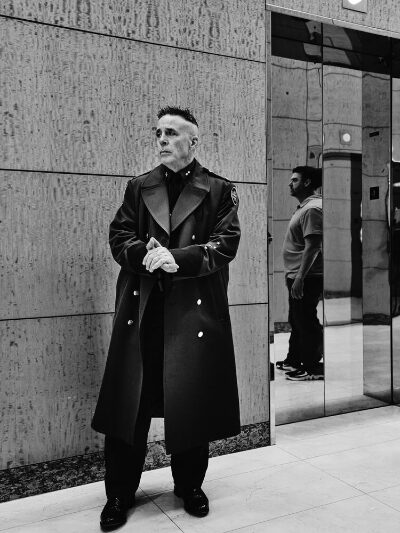
History has taught people to be wary when force looks theatrical in moments of civilian pain. Not because uniforms or authority are evil—but because pageantry has so often been used to mask distance.
This is not about clothing.
It is about timing.
What reassures people in calm times becomes threatening in moments of loss. The same posture that projects strength on a parade ground can read as cold indifference when someone has just been killed.
And the public knows this instinctively.
They don’t need to be told why something feels wrong.
They just feel it.
When authority hardens its appearance while the community is still raw, it sends a message—intended or not.
It says: control first, empathy later.
That order matters.
Because here is the uncomfortable truth institutions often resist:
You can be within the law and still lose legitimacy.
You can follow protocol and still inflame distrust.
You can be authorized and still misread the moment so badly that trust collapses.
Legality is not the same thing as credibility.
Credibility is earned in posture.
Strong authority does not need to look intimidating.
It doesn’t need to dominate the visual field.
It doesn’t need to assert itself before listening.
Weak authority does.
Weak authority compensates with silhouette.
With costume.
With symbols meant to quiet dissent rather than absorb pain.
Real authority does the opposite.
It reduces its footprint.
It slows down.
It makes space.
It understands that grief amplifies perception. Every gesture is magnified. Every tone is scrutinized. Every image becomes a statement whether intended or not.
That is why optics are not superficial.
They are the first language of power.
Long before explanations are heard, the public has already decided whether authority is operating in good faith.
This is where institutions repeatedly stumble.
They assume people are angry because they are uninformed.
They believe better messaging will fix it.
They mistake emotional injury for a communications problem.
It is not.
The anger you are seeing right now is not irrational.
It is not manufactured.
It is not the result of social media hysteria.
It is the response of a society that feels unseen at a moment of loss.
When people believe power is more focused on projecting dominance than acknowledging human cost, they stop listening. Not because they are unreasonable—but because trust has quietly slipped out of reach.
And once that happens, explanations no longer land.
You cannot reason someone out of grief.
You cannot legal-brief someone into calm.
You cannot posture your way back into legitimacy.
What you can do is meet the moment correctly.
That requires discipline.
It requires leaders who understand that composure is not weakness, and restraint is not retreat. It requires authority that knows when to soften its edges without surrendering its role.
The strongest signal power can send in moments like this is not force.
It is humility.
Humility says: We see the cost.
Humility says: We are present before we are defensive.
Humility says: We understand why this hurts.
That does not mean abandoning law.
It means honoring humanity alongside it.
When institutions get this wrong, the damage isn’t immediate. It accumulates. Trust erodes quietly, and people disengage long before anything breaks visibly.
This is how stability is lost—not in explosions, but in repeated misread moments.
The public is not asking authority to disappear.
They are asking it to remember why it exists.
To protect life.
To preserve dignity.
To keep force as a last resort, not a first impression.
Power that wants to stabilize a shaken society must lead with composure before command.
Because once people decide authority is more invested in its image than in human consequence, legitimacy drains away—and no amount of enforcement brings it back.
In moments like this, leadership is not measured by how tall it stands.
It is measured by how carefully it moves.
Unauthorized commercial use prohibited.
© 2026 The Faust Baseline LLC