The Faust Baseline™Purchasing Page – Intelligent People Assume Nothing
micvicfaust@intelligent-people.org
This year doesn’t feel like one where maps are much help.
Too many of them don’t match what people are seeing with their own eyes.
Too many of them assume calm where there isn’t any.
Too many of them were drawn for a world that doesn’t quite exist anymore.
That doesn’t mean everything is broken.
It means the old guides aren’t lining up the way they used to.
When that happens, the first mistake people make is moving faster.
They think speed will clear things up.
They think action will bring clarity.
They think choosing something is better than standing still.
It usually isn’t.
Most bad decisions don’t come from choosing the wrong path.
They come from moving before you know where you are.
That’s why sailors didn’t rely on guesswork when the sea got rough.
They didn’t rely on stories.
They didn’t rely on confidence.
They relied on instruments.
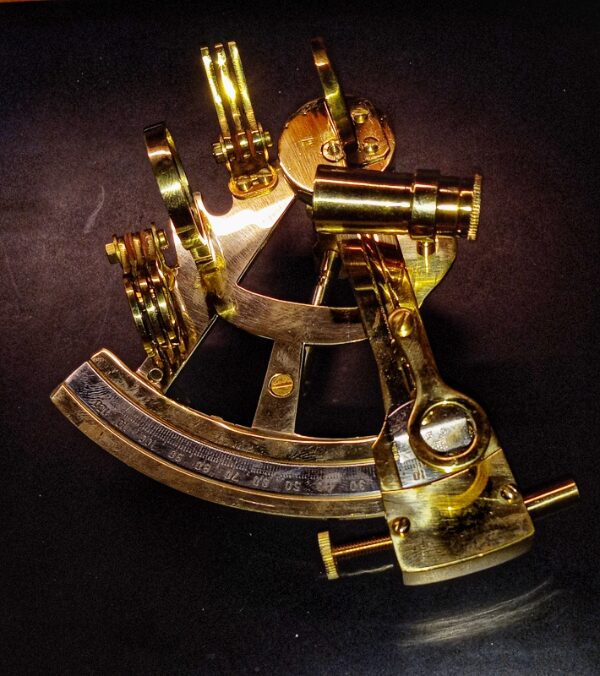
A sextant doesn’t tell you where to go.
It doesn’t promise smooth water.
It doesn’t care what you want the answer to be.
It tells you where you are.
That’s all.
And that’s enough.
Right now, a lot of people aren’t looking for direction.
They’re looking for position.
They don’t need someone pointing ahead and shouting orders.
They need something they can check against before they move.
This year is heavy with noise.
Everywhere you turn, someone is telling you what matters, what’s urgent, what you should be afraid of, what you should already know. Most of it changes tone by the week. Some of it changes by the day.
That kind of environment wears people down.
Not because people are weak.
Because constant adjustment is exhausting.
When everything keeps shifting, the mind looks for something that doesn’t.
That’s when people stop engaging loudly and start checking quietly.
They revisit the same places.
They reread the same lines.
They look for consistency, not excitement.
That behavior gets misunderstood.
It gets called apathy.
It gets called indecision.
It gets called disengagement.
It isn’t.
It’s restraint.
People with responsibilities don’t rush when the ground feels uneven. They slow down. They test. They make sure their footing is solid before they commit weight.
That’s not fear.
That’s how adults behave when mistakes are expensive.
A sextant fits that moment perfectly.
It doesn’t rush you.
It doesn’t pressure you.
It doesn’t flatter you.
It gives you a reading and lets you decide what to do with it.
That’s what a safe place really is.
Not comfort.
Not agreement.
Not reassurance that everything will be fine.
A safe place is something that doesn’t move when you need to check yourself.
Something that stays steady even if you only stop by for a minute.
Something that doesn’t ask anything from you just because you showed up.
That kind of steadiness is rare right now.
A lot of things are pretending to be anchors that aren’t.
They talk certainty but change constantly.
They promise clarity but keep shifting the terms.
People can feel that, even if they can’t explain it.
That’s why instinct matters more than arguments this year.
Instinct isn’t guessing.
It’s pattern memory.
It’s the part of the mind that says, “This feels solid,” or, “Something here doesn’t add up,” before the words catch up.
But instinct alone isn’t enough when everything is loud.
That’s when people need a reference.
A sextant doesn’t replace instinct.
It checks it.
It keeps you honest about your position before you act on what you feel.
That’s the role The Faust Baseline is meant to play.
Not a plan.
Not a movement.
Not a forecast.
A reference.
A way to check yourself when the noise is high and the pressure is on.
You don’t have to agree with everything here.
You don’t have to stay.
You don’t have to explain yourself.
You can come by, take a reading, and move on.
Or you can sit longer.
Either way, it doesn’t change its tone to keep you around.
That’s important.
Anything that tries too hard to hold your attention usually isn’t built to hold weight.
The Faust Baseline isn’t here to excite anyone.
It’s here to stay legible when other things stop making sense.
This year is going to change how people move.
Less talk.
Fewer big declarations.
More checking before committing.
People are going to want fewer answers and more reliability.
They’re going to care less about being right out loud and more about not being wrong in practice.
That shift is already happening, whether it’s being talked about or not.
When it settles in, people won’t say they were waiting for a sextant.
They’ll just act like they found one.
They’ll move with more confidence and less noise.
They’ll make fewer wrong turns.
They’ll stop explaining themselves to people who aren’t paying attention anyway.
And afterward, they may not even be able to say why it felt right.
They’ll just know they weren’t guessing anymore.
This year doesn’t need more speed.
It needs fewer blind moves.
It doesn’t need louder voices.
It needs steadier ones.
It doesn’t need promises.
It needs something that tells the truth about where you are.
That’s what a sextant does.
And that’s why we need one this year.
Not to tell us where to go.
Just to make sure we’re not lying to ourselves before we move.
That’s enough to keep people upright.
And that’s enough to begin.
Unauthorized commercial use prohibited.
© 2026 The Faust Baseline LLC