The Faust Baseline™Purchasing Page – Intelligent People Assume Nothing
micvicfaust@intelligent-people.org
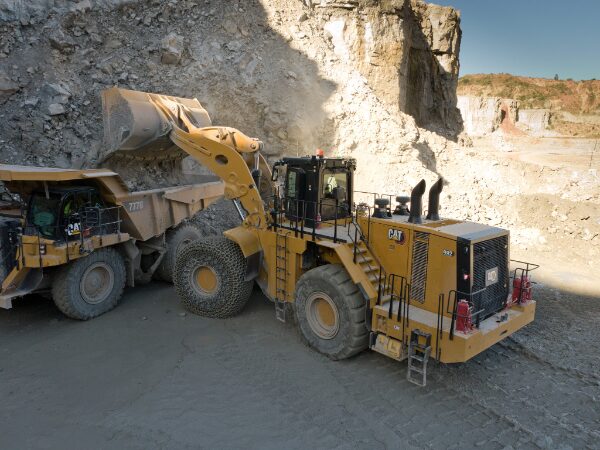
Anyone who’s ever run heavy equipment learns something fast.
You don’t multitask.
If you’re sitting in a dozer, a loader, or under an overhead crane, your world narrows. Not because you lack imagination—but because everything moves with consequence. Steel has weight. Momentum doesn’t negotiate. Mistakes don’t rewind.
The job in front of you becomes the only job.
Nobody expects the operator to be thinking about five other things. Nobody wants commentary, opinions, or clever shortcuts. What they want—what they need—is focus. Hands steady. Eyes clear. Mind on the task that’s moving thousands of pounds through space.
That level of attention isn’t optional.
It’s responsibility.
And it exists for a reason.
When equipment is large and purpose-driven, distraction turns dangerous fast. That’s why skilled operators are trained to slow down mentally even when the work needs to move forward. You don’t rush judgment. You don’t split focus. You respect the machine by respecting the moment.
That mindset used to be understood everywhere—not just on job sites.
Skill, real skill, has always required deliberate attention.
You see it in carpentry.
In electrical work.
In flying an aircraft.
In medicine.
In navigation.
Anywhere the margin for error is thin, the rule is the same:
One task. One moment. Full presence.
Somewhere along the way, we started pretending that attention was flexible. That we could divide it without cost. That speed and awareness could coexist without tradeoffs.
They can’t.
Attention diluted is judgment weakened.
The Baseline was built with this truth at its core.
Not as a metaphor.
As a working principle.
It assumes that when decisions matter, the person making them deserves a tool that clears the noise, not adds to it. A structure that pulls focus back to what is actually in motion—what is actually at risk—right now.
Just like heavy equipment, the systems we’re dealing with today move with purpose. They’re not idle. They carry momentum. And when they go wrong, the damage isn’t abstract.
That’s why the Baseline doesn’t encourage multitasking of thought.
It doesn’t ask you to balance ten considerations at once.
It doesn’t reward cleverness under pressure.
It doesn’t let you blur responsibility across context and convenience.
It brings you back to the operator’s seat.
What is moving?
What am I responsible for?
What happens if I’m wrong?
Those questions aren’t dramatic.
They’re practical.
Anyone who’s worked around serious machinery knows this: the most dangerous operator isn’t the inexperienced one—it’s the distracted one. The person who mostly knows what they’re doing but lets their attention drift.
Skill isn’t proven by speed.
It’s proven by control.
And control only comes from presence.
This is where a lot of modern systems fail people. They flood the operator with information. They encourage reaction instead of focus. They mistake activity for competence.
The Baseline does the opposite.
It narrows the field.
It slows the moment.
It insists that attention be paid where weight is moving.
That discipline isn’t about fear.
It’s about respect.
Respect for the task.
Respect for the consequences.
Respect for the person doing the work.
If you’ve ever run equipment where a wrong move could hurt someone—or ruin a day, or worse—you already understand this instinctively. You didn’t need it explained. You learned it by doing.
The Baseline is built for people who recognize that same principle applies to thinking, deciding, and judging in systems that now carry real weight.
Not everything needs to be fast.
Not everything needs to be clever.
Some things need to be handled carefully.
Skills require deliberate attention because reality demands it.
And when the work in front of you has mass, momentum, and consequence, the only responsible posture is the one operators have always taken:
Eyes forward.
Hands steady.
Mind on the moment.
That’s not old-fashioned.
That’s how you keep things upright when they’re moving with purpose.
Deliberate attention refers to the intentional and focused application of mental resources to a specific task or stimulus, enhancing productivity and cognitive performance.
Unauthorized commercial use prohibited.
© 2026 The Faust Baseline LLC