The Faust Baseline™Purchasing Page – Intelligent People Assume Nothing
micvicfaust@intelligent-people.org
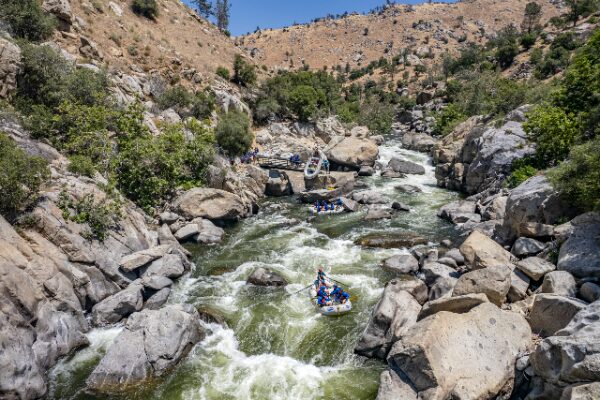
I spent close to twenty years running the Kern River.
Not as a job. As a sport. Private trips. Private crews. The kind of river time where nobody’s padding a résumé and nobody’s getting paid to tolerate nonsense. You go because you love the water, and you stay because you respect what it can do to you if you don’t.
That much time on a river teaches you things books can’t.
One of the biggest lessons is this: danger doesn’t announce itself with noise. Real danger shows up when judgment slips and composure breaks.
There’s a moment on fast water when you know whether a boat is still safe. It’s not about how big the rapid is. It’s not about how fast the current’s moving. It’s about who’s reading the river—and how they’re holding themselves while doing it.
I stepped out of a raft once on the Kern because the person calling the line started yelling at the crew in anger. He was a good friend. Strong paddler. Knew the river. The water was moving hard that day. But the instant he stopped reading water and started reacting to people, I knew I was done. I got to shore.
That wasn’t fear.
That was judgment.
Anger has no place in a boat on fast water. Not because it’s rude—because it’s blind. The river doesn’t respond to volume. It responds to timing, angle, pressure, and restraint. The louder someone gets, the less they’re listening to what the water is telling them.
Experience doesn’t shout.
It watches.
When you’ve run rivers long enough, you learn that a raft only survives with one line. One call. One rhythm. You can have strong crew members. You can have skilled paddlers. But the moment multiple people start pulling in different directions, the raft becomes unstable. Not eventually. Immediately.
That’s how boats flip.
You don’t debate in a chute. You don’t argue mid-rapid. You either trust the person reading the water, or you step out before you endanger everyone in the boat. That isn’t ego. It’s respect—for the river and for the people with you.
People who haven’t run water think rivers are chaos. They aren’t. They’re systems. Complicated ones, but readable if you know what to look for. Eddies tell you where pressure eases. Sink holes tell you where force drops away beneath you. Seams show you the boundary between safety and trouble. Sometimes the smartest move isn’t to push—it’s to portage. Other times hesitation is what flips you, and you dig in hard and commit.
The key is reading the whole run at once.
That’s how people work too.
People don’t move in straight lines. They never have. They move like water—loops, stalls, surges, quiet stretches, sudden drops. Old rules worked when things moved slower. Calm water lets you rely on habits. Fast water demands awareness.
You can’t judge a river by one splash.
You can’t judge people by one signal.
You watch patterns. You feel pressure. You notice where things slow down and where they accelerate. Silence isn’t empty—it’s information. So is sustained presence. So is who keeps showing up without making noise.
Sometimes you dig in.
Sometimes you portage.
And sometimes you step out of the boat because leadership has lost composure.
That isn’t quitting.
That’s staying alive.
Twenty years on a river teaches you this: strong current is manageable. Confusion isn’t. Noise isn’t. Competing directions aren’t.
One boat.
One line.
Or step aside before you flip everyone.
The river doesn’t forgive mixed signals.
Unauthorized commercial use prohibited.
© 2026 The Faust Baseline LLC