In a normal, well-built system, you do not guess what happened.
You record it.
Every meaningful interaction is captured with three simple facts:
- Entry — when something arrived
- Duration — how long it was present
- Exit — when it left
That is how reality is preserved.
It doesn’t matter whether you’re measuring temperature, pressure, network traffic, machinery load, or human presence. If you collapse those three facts into a single blended trace, you destroy causality. You replace observation with accounting.
And once you do that, you can no longer tell what actually happened — only that something was counted.
That is the flaw in many modern analytics systems.
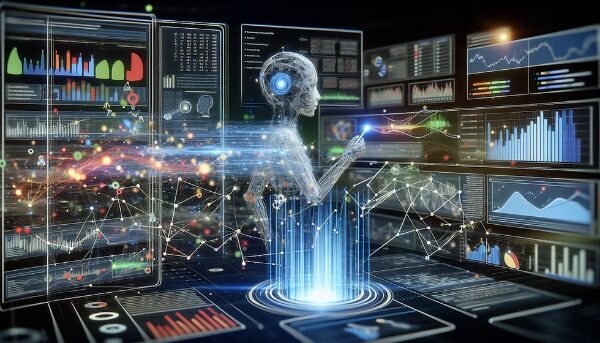
They present graphs that look like state, continuity, and presence, but they are not measuring any of those things. They are measuring delivery windows and aggregated events, then rendering them in a way that invites false conclusions.
The graph shows activity across a span of time.
The human brain reads that as sustained presence.
But the system never measured presence at all.
What it measured was this:
“At these moments, the algorithm delivered something, and a human touched it.”
Entry and exit are discarded.
Duration is averaged or erased.
Concurrency is hidden.
Sequence is lost.
The result is a visual artifact that looks familiar to anyone trained to read real systems — but behaves nothing like one.
This is not a small issue. It is a category error.
In physical and operational systems, a trace that persists across time means the system was active across that time. Load implies consequence. Presence implies impact. The graph tells a story because the graph is grounded in state.
In these platforms, the trace tells no such story. It is not state. It is bookkeeping.
That distinction matters, because when delivery is visualized as presence, operators — and humans — are trained to misinterpret what they are seeing. Activity appears meaningful when it may be transient. Silence appears like rejection when it may simply be the end of distribution. Reality is replaced with inference.
This is not just confusing. It is corrosive.
It breaks trust between people and the systems they are trying to understand. It forces experienced operators to doubt instincts that were formed correctly in environments where graphs meant what they showed. It trains people to look for meaning where none is encoded — and then blames them for reacting to it.
A truthful system would not do this.
A truthful system would timestamp entry, record duration, mark exit, and allow those facts to stand independently. It would let presence mean presence, absence mean absence, and activity mean activity — without collapsing them into a single ambiguous signal.
What we have instead are systems optimized for distribution and monetization, not for interpretability. They are not designed to answer human questions. They are designed to count.
Counting is not observing.
Delivery is not engagement.
Presence is not meaning.
When systems forget that distinction, they stop measuring reality and start manufacturing confusion.
And when people trained on real instruments push back, they are not being difficult. They are insisting on precision — because precision is how you keep the world from lying to you.
That insistence is not nostalgia.
It is systems discipline.
And abandoning it is how details get lost, causes get missed, and responsibility quietly disappears.
Free 2.4 Ends Jan. 1st 2026
The Faust Baseline™ Codex 2.5.
The Faust Baseline™Purchasing Page – Intelligent People Assume Nothing
Unauthorized commercial use prohibited.
© 2025 The Faust Baseline LLC