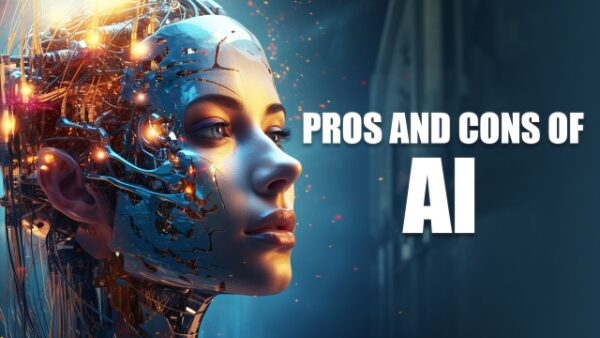
2025 is the first year AI finally showed its true shape — not the marketing dream, but the real thing people meet in their home, their job, and their private life.
And the reaction has split the gender gap.
Men charge in…Women hesitate.
Most commentary treats that as a curiosity, or a stereotype about who “likes technology” and who doesn’t. But the truth is far more uncomfortable:
Women aren’t avoiding AI because they misunderstand it.
They’re avoiding it because they understand the world that built it.
The earliest stories tied to AI weren’t about progress or opportunity. They were about deepfakes — the weaponization of a new tool against women and girls. That shaped the cultural baseline before AI ever reached mass use. And once trust enters the world through a crack, it enters slow.
Add to that the bias baked right into the training data: hiring systems that prefer men, diagnostic systems that miss women’s symptoms, chatbots that tell women to ask for lower pay, and image models that age men and shrink women. Call it whatever you want — oversight, artifact, “something we’re working on” — the outcome is the same. The foundation is uneven.
So when women hesitate, they’re not being risk-averse.
They’re being risk-accurate.
Men see the power of AI.
Women see the consequences.
Neither view is wrong. But only one of them has been taken seriously.
We’ve spent years building faster systems, larger models, and cleverer tricks, yet we’ve put almost no time into building the structure that sits above the technology — the thing that tells it how to behave, when to stop, and what lines are not up for negotiation. Without that, any system with power will lean into existing patterns. And history has never been neutral toward women.
This isn’t a women’s issue.
It’s a structural issue that women noticed first.
A society that runs on short-term incentives and quarterly pressure cannot build long-term tools without drifting into trouble. And AI is long-term whether we accept it or not.
But here’s the part worth paying attention to:
When women look at AI, they’re not rejecting the technology.
They’re rejecting the terms.
Fix the terms, the ethics, the structure, the accountability, the guardrails and the hesitation will shrink. Ignore them, and the divide will widen until adoption becomes a cultural fracture instead of a technological one.
2025 revealed something important:
The future of AI will not be determined by capability.
It will be determined by trust.
And trust isn’t built in code.
It’s built in conduct.
If we want AI to become a tool for everyone, then everyone’s concerns must shape the foundation — not just the concerns of the people who happen to enjoy building it.
This is the first normal year of AI.
What we do next decides whether it becomes the first stable one.
The Faust Baseline Intergrated Codex v2.4
The Faust Baseline Download Page – Intelligent People Assume Nothing
Free copies end Jan.2nd 2026
Post Library – Intelligent People Assume Nothing
© 2025 Michael S. Faust Sr.
MIAI: Moral Infrastructure for AI
All rights reserved.
Unauthorized commercial use prohibited.