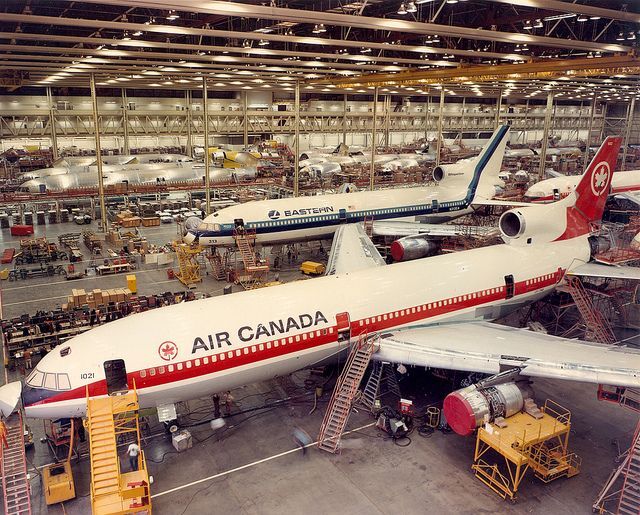
In aviation, most disasters don’t start in the air.
They start on the ground—quietly—
with a mistake no one notices until the system is already moving.
A part installed slightly wrong.
A step skipped because the clock was ticking.
A checkmark assumed instead of verified.
Nothing dramatic.
Just latent failure waiting for the right moment.
AI is now in the exact same phase.
Everyone’s staring at the cockpit…
while the real risk is happening in the maintenance hangar.
Not in what the model does today,
but in what goes unseen, unlogged, and unchecked—
the errors that don’t show up until they’ve already become behavior.
Aviation learned this the hard way.
Maintenance technicians work:
late hours,
in confined spaces,
under pressure,
with tasks that take longer to prepare than to perform.
Sound familiar?
AI systems operate under the same conditions—
only the strain is cognitive instead of physical.
Humans crack.
Models drift.
Different mechanics,
same physics.
Aviation didn’t fix the problem with a motivational speech.
It didn’t hold a summit on “responsible wing installation.”
It built structure:
checklists that don’t care how confident you feel
refusal logic that prevents skip culture
documentation that replaces memory
stability before scale
precision instead of personality
Not perfection—
procedures that don’t allow silent failure.
That’s the same architecture the Faust Baseline brings to AI.
It doesn’t try to solve the crisis later.
It removes the conditions that create the crisis in the first place:
no emotional coercion
no guessing under uncertainty
no drift because the mood changed
no harm because the system refused before it responded
Aviation calls that human-factor safety.
AI is still calling it “ethics someday.”
Every industry reaches a moment when good intentions stop working
and only structure keeps people safe.
Aviation got there a century ago.
AI just arrived.
And the answer won’t come from another panel or definition.
It will come from the same lesson the sky already taught:
The failures you don’t see are the ones that bring a system down.
The only difference is whether you build the structure
before the trouble shows up.
Faust Baseline™ — Integrated Codex v2.2
The Faust Baseline Download Page – Intelligent People Assume Nothing
Free copies end Jan.2nd 2026
“Want the full archive and first look at every Post click the “Post Library” here.
Post Library – Intelligent People Assume Nothing
© 2025 Michael S. Faust Sr. | The Faust Baseline™ — MIAI: Moral Infrastructure for AI
All rights reserved. Unauthorized commercial use prohibited.